
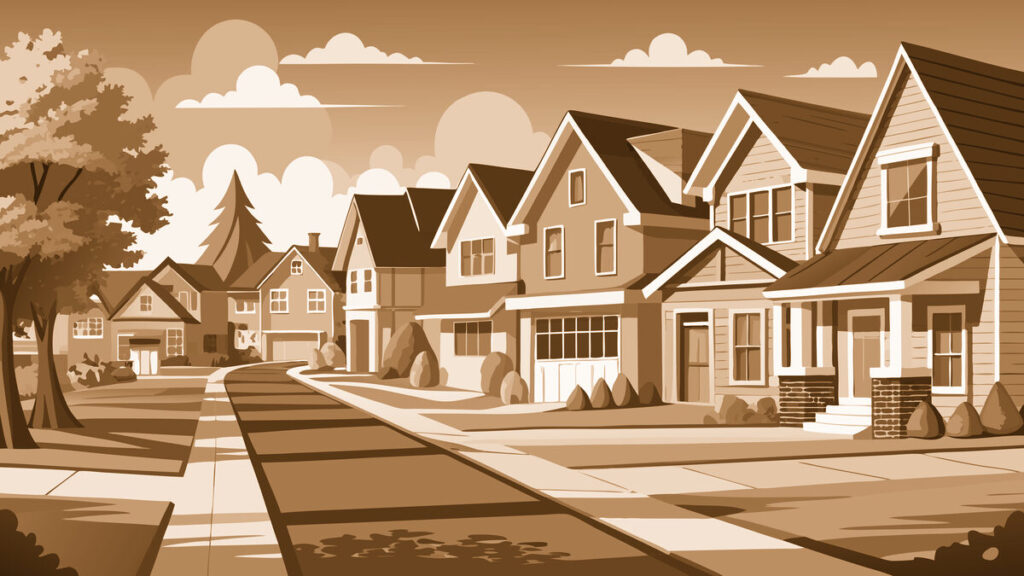
Nestled in southwest Durham, the Belcrest neighborhood stands as a testament to the city’s rich tapestry of community, history, and quiet charm. Unlike some newer developments that sprouted overnight, Belcrest’s story traces a steady evolution, reflecting the larger patterns of Durham’s growth while retaining an identity all its own.
Origins: Where Belcrest Began
Belcrest’s roots reach back to the post-World War II boom, when Durham’s population was expanding and families sought peaceful, tree-lined streets away from downtown’s bustle. The land that now forms Belcrest once belonged to a patchwork of farmers and homesteaders, whose fields brushed up against the early arteries of Hope Valley Road and Martin Luther King Jr. Parkway. By the late 1950s, as Durham emerged as a research and education hub, this once-rural patch became fertile ground for neighborhood development.
The name “Belcrest” is believed to be a fusion of words: ‘bel’ for beauty or “belle,” and ‘crest’ referencing its gently rolling hills. Early advertisements for the subdivision promised “Beautiful homes on the crest of Durham,” emphasizing natural elevation and suburban appeal. The developers sought to attract teachers, professionals from burgeoning Duke University and North Carolina Central University, and families eager for community but close to urban amenities.
Key Historical Milestones
The streets of Belcrest—Crutchfield Street, Redwood Road, and Beechwood Drive—quickly filled with sturdy ranch and split-level homes through the 1960s. By the early 1970s, Belcrest was fully established, with a residents’ association forming to foster neighborly connection and address the changing needs of the area.
- 1965: Belcrest Community Association is founded, orchestrating beloved neighborhood traditions from annual block parties to holiday parades.
- 1972: The completion of Crestwood Park, which remains a community anchor with its tall oaks, playground, and open green for impromptu picnics.
- 1980s: As Durham’s economy diversified, Belcrest saw new residents from different backgrounds, enriching its cultural fabric.
- 2001: The nearby expansion of the American Tobacco Trail introduced miles of accessible greenway to locals, making Belcrest a favorite landing spot for walkers, joggers, and cyclists.
Notable Landmarks and Institutions
While Belcrest is primarily residential, it’s dotted with quiet gems that locals cherish. The unassuming Crestwood Park off Crutchfield Street may not draw crowds from across the city, but its small playground, looping path, and spring-blooming azaleas make it a daily retreat for families and dog walkers.
Also notable is the century-old stone marker at the corner of Redwood Road and Beechwood Drive, a relic from the area’s farming days. It once marked the boundary of a farmstead owned by the Brooks family, early stewards of this land. Walking the neighborhood today, it’s common to spot plaques in front lawns commemorating founding families, or to hear stories from longtime residents about the earliest Halloween parades that wound from one end of Redwood Road to the other.
Of personal note to many neighbors is the proximity to institutions like Rogers-Herr Middle School and Durham Technical Community College, both of which have seeded the area with educators, students, and lifelong learners.
Evolution Through the Decades
Belcrest’s transformation mirrors the changing face of Durham. In the early days, residents recall dirt roads, backyard gardens, and evenings spent watching city lights flicker on the horizon. As the Research Triangle drew international attention and Durham’s population grew more diverse, Belcrest evolved gracefully:
- 1970s-80s: Saw an influx of young professionals, drawn by affordable homes and quality schools.
- 1990s: New infrastructure and the arrival of nearby shopping centers like Lakewood added convenience, without compromising Belcrest’s tranquil charm.
- 2000s-present: Today, the neighborhood is a vibrant mosaic—original homeowners mixing with new arrivals, young families revitalizing homes with fresh paint but preserving classic midcentury touches.
Community life remains Belcrest’s beating heart. The annual Spring Fling at Crestwood Park is still greeted with picnics and lemonade stands. Front porches are gathering spots on warm evenings, where neighbors swap tomatoes and stories, and civic pride runs deep. Generations of Durhamites have found belonging here, united by a shared appreciation for Belcrest’s peace and accessibility.
What Makes Belcrest Special Today
Most Durham neighborhoods claim a sense of community, but in Belcrest, it’s truly tangible. The leafy canopy over Beechwood Drive, the laughter from backyard gatherings, and the pride in neat garden plots all contribute to its timeless feel. Residents love that they can walk to the American Tobacco Trail, send their kids to top-rated local schools, or reach downtown Durham in under fifteen minutes.
Belcrest’s homes, with their broad lawns and inviting porches, echo the past while staying firmly rooted in the present. There’s a respect for what came before: older trees are rarely felled, “classic” holiday light displays resurface every winter, and oral histories are passed along over cups of strong coffee.
For those wandering through Belcrest for the first time, the neighborhood offers a welcome that’s both reserved and warm—the kind built on decades of looking out for one another. It’s an unassuming gem, thriving quietly alongside Durham’s transformation.
Today, Belcrest stands not just as a crossroads of old and new Durham, but as living proof that neighborhoods are more than houses and streets—they’re made up of histories shared, roots established, and hopes for the future, all quietly unfolding beneath the shade of mature oaks.